
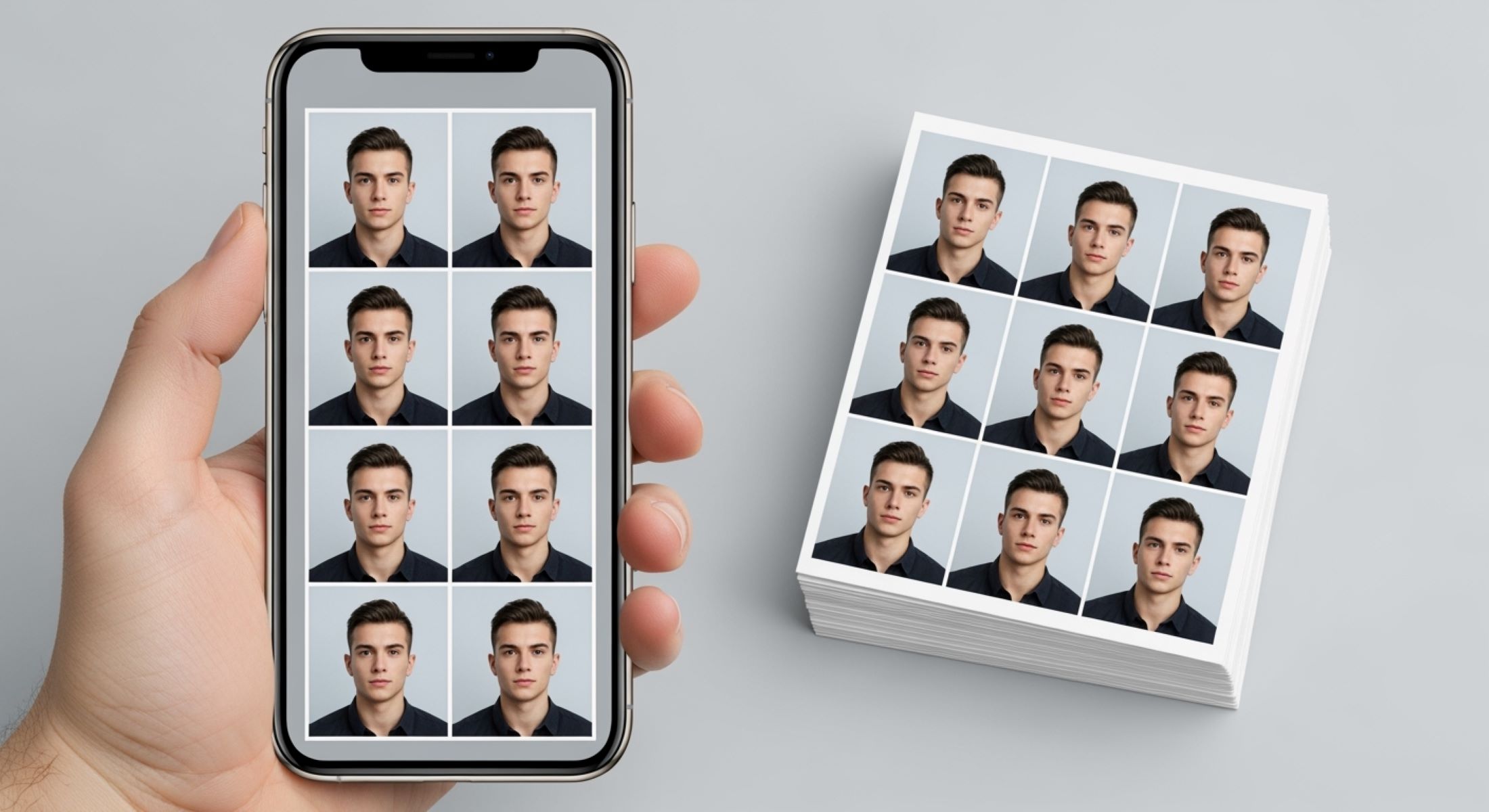
Digital vs. printed passport photos: when do you need each?
Travel documents are one of those things that can either make your journey smooth or turn it into a stressful mess. Passport photos sit right at the center of that equation. These tiny images have strict rules, endless guidelines, and different formats depending on where you’re applying. The real question most people face today is: Do I need a digital passport photo, a printed one, or both? Let’s break it all down in a simple, engaging way so you’ll never second-guess your choice again.
Why Passport Photos Are More Important Than You Think
It’s easy to think of a passport photo as just another formality, a quick snapshot you take before an international trip. But in reality, these small images carry enormous weight in the world of global travel. Passport photos are not merely pictures—they are official representations of your identity. Governments use them to verify that the person holding the passport matches the photograph on file. If your photo doesn’t meet the exact specifications, it’s not just a minor inconvenience; it can lead to outright rejection of your application, causing delays that can disrupt your travel plans or even prevent you from traveling altogether.
The requirements for passport photos are stricter than most people realize. Authorities dictate everything from the background color to the exact positioning of your head and the expression on your face. Even subtle differences, such as shadows on the face, uneven lighting, or a slightly tilted head, can make a photo invalid. Think of it like a lock-and-key system: your photo is the key, and the official standards are the lock. If the key isn’t shaped precisely, it won’t open the door, no matter how minor the misalignment seems.
Beyond bureaucratic necessity, passport photos play a crucial role in security and identity verification worldwide. Airports, embassies, and immigration authorities rely on these images to detect fraud, prevent identity theft, and maintain national security. Inaccurate or poor-quality photos can lead to misidentification, which may cause you to miss flights, face questioning at borders, or even trigger suspicion in high-security environments. Essentially, the quality and compliance of your passport photo are directly tied to how efficiently and safely you can travel.
Finally, the importance of passport photos extends to practical convenience. A rejected application often means paying extra fees, making another trip to a photo studio, or waiting weeks for a new passport to be processed. By ensuring your passport photo meets all specifications the first time, you save yourself time, money, and unnecessary stress. In an era where travel plans can be tightly scheduled and expensive, the seemingly small step of getting your photo right is actually a critical investment in a smooth journey.
The Evolution of Passport Photos: From Paper to Digital
| Era/Phase | Timeframe | Primary Format | Key Features | Impact on Travelers |
| Printed Era | Early 20th century–2000s | Physical photo prints | Black-and-white or color, studio lighting, glued to forms | Required trips to photo studios, multiple copies, slow process |
| Digital Shift | 2000s–2015 | JPEG/PNG digital files | High-resolution images, specific pixel dimensions, background precision | Enabled online applications, faster submission, easier storage |
| Hybrid Phase | 2015–Present | Both printed and digital | Option to upload or submit printed copies, apps for editing | Greater flexibility, still requires accuracy, suitable for online & offline submissions |
| Automated Biometric | 2010s–Present | Digital/biometric images | Facial recognition, machine-readable features | Enhanced security, quicker verification at borders |
| Future Trend | 2025+ | Fully digital & biometric | Mobile submissions, AI verification, possible photoless ID | Simplified travel, minimal paper use, faster processing |
Understanding the Core Difference Between Digital and Printed Passport Photos
- Digital passport photos exist as files, usually in JPEG or PNG format, which can be uploaded directly to online applications, websites, or government portals. They are stored on devices or cloud platforms, making them easy to access and share anytime you need them. Digital photos are generally cheaper to obtain, especially if you take them at home with a smartphone, and they offer instant submission for online applications, which can save time and reduce hassle.
- Printed passport photos, on the other hand, are physical images printed on glossy or matte photo paper. They are attached to forms or documents submitted in person. These photos take up physical space and need to be stored carefully to avoid damage or fading. Getting printed photos usually involves additional costs, whether through a professional studio or printing at a kiosk, and the process is slower because it requires printing, cutting, and sometimes multiple copies to meet requirements.
- In terms of size, digital photos are measured in pixels, often with precise dimensions like 600×600, depending on the country’s specifications. Printed photos are measured in physical units, such as inches or centimeters—for example, 2×2 inches or 35×45 mm—and must be cut accurately to fit the official document standards. Any misalignment in either format can result in rejection by authorities, so precision is crucial in both cases.
- Submission methods also differ significantly. Digital photos are uploaded directly through portals or apps, which allows for immediate verification and storage in electronic systems. Printed photos require physical handling and in-person submission, which can introduce delays or errors if the prints are not handled correctly. While digital photos cater to the convenience of modern online processes, printed photos remain essential for situations that demand physical documentation, like in-person passport or visa applications.
- Storage and preservation further highlight the difference. Digital photos are easy to back up and duplicate, meaning you can store several copies safely in different locations and avoid losing them. Printed photos are susceptible to physical damage, such as creasing, water stains, or fading over time, making them less durable unless carefully protected. This makes digital photos more practical for repeated submissions or online processes, while printed photos serve as tangible proof for official purposes.
- The cost factor cannot be ignored. Taking a digital photo at home is almost free if you already own a smartphone or camera, whereas printed photos generally require paying for studio services or high-quality photo paper. Even if a studio provides both digital and printed versions, printed copies usually add extra cost, making digital the more economical option for frequent travelers or applicants.
- Speed and convenience tip the scale further toward digital photos. With a digital file, you can instantly submit your passport photo online, reducing wait times dramatically. Printed photos, by contrast, involve extra steps: printing, cutting, possibly mailing, or visiting an office to submit in person. This makes digital the go-to choice for fast, hassle-free applications, though printed photos still remain mandatory in certain traditional or in-person procedures.
When Do You Need Digital Passport Photos?
Digital passport photos have become essential in today’s increasingly online world. Governments and agencies are moving many of their services to digital platforms, which means that physical copies of your passport photo are often no longer sufficient. When applying for a passport or renewing one online, most portals now ask you to upload a high-resolution digital image. This allows officials to process applications faster and ensures that photos meet the required standards without the delays that come with printing and mailing physical copies.
One of the most common situations where digital photos are required is for online passport renewals. Many countries offer digital submission portals that eliminate the need to visit a passport office in person. With a digital photo, you can upload your image directly to the system, confirm it meets all specifications, and complete your application from the comfort of your home. This process reduces waiting times, minimizes paperwork, and provides a convenient way to handle renewals, especially for busy travelers or people living far from government offices.
Visa applications are another scenario where digital photos are increasingly mandatory. Countries such as the United States, Australia, and Canada have implemented online visa application systems where a correctly formatted digital photo must be uploaded. The photo is used for identity verification and must meet strict criteria, including resolution, background color, head position, and facial expression. Submitting a photo that doesn’t comply can lead to rejection, delays, or requests for resubmission, making attention to detail crucial in these cases.
Digital passport photos are also widely used for identity verification beyond government travel documents. Many banking services, e-visas, and online platforms now require a digital photo to confirm identity and prevent fraud. This makes having a properly formatted digital photo not just a convenience but a necessity in various aspects of modern life. In essence, if any part of the application or verification process is conducted online, a digital passport photo is likely mandatory, and ensuring it meets all guidelines is key to avoiding delays or complications.
When Do You Need Printed Passport Photos?
| Scenario | Who Requires It | Format | Reason | Impact on Travelers |
| First-time passport applications | Local passport offices | Printed photo, standard size | Ensures compliance with official standards | Must visit a studio or office; no online alternative |
| In-person visa applications | Embassies and consulates | Glossy or matte printed photo | Needed for manual verification and stamping | Submission delays if photo does not meet requirements |
| Backup requirements | Various government or travel authorities | Printed photo, multiples preferred | Acts as a safeguard against digital upload errors | Saves time if digital system fails |
| Local ID cards | National ID agencies, DMV, or permits | Physical photo per ID standards | Physical proof of identity | Required for ID processing; essential for official docs |
| Special administrative forms | Schools, banks, legal offices | Passport-size printed photo | Some forms do not accept digital submissions | Ensures smooth acceptance of documents |
The Countries Where Digital Photos Are Mandatory
- United States: Digital passport photos are mandatory for online DS-160 visa applications. Applicants must upload a high-resolution digital image that meets strict specifications regarding size, background, and facial positioning. The digital submission helps streamline the application process, reduces physical handling, and allows officials to verify identity quickly. Failure to comply with the digital photo requirements can result in delays or rejection of the visa application.
- United Kingdom: The UK requires digital photo uploads for online passport renewal. The system automatically checks whether the photo meets official standards, including lighting, facial expression, and background color. This eliminates the need for printed copies in most online applications and ensures faster processing times. Travelers applying from abroad or within the country benefit from the convenience of submitting their passport photo digitally.
- Australia: While Australia accepts both printed and digital photos, it strongly prefers digital submissions for e-passport and visa applications. Digital photos allow government systems to process applications more efficiently, using automated verification tools to check compliance with strict guidelines. This reduces human error and speeds up approval times, making it easier for applicants to complete the process remotely.
- Canada: Digital photos are required for online permanent residency (PR) applications, immigration forms, and other electronic submissions. Applicants must ensure the photo file is in the correct format, resolution, and meets all biometric standards. Digital submissions simplify storage, verification, and communication between immigration officers and applicants, allowing faster responses and fewer rejections due to technical errors.
- India: India accepts both printed and digital photos, but online passport and visa applications increasingly favor digital uploads. The government’s e-passport system requires precise digital images for verification purposes. Even when printed copies are occasionally needed for backup, the shift toward digital compliance reflects a broader global trend in travel documentation.
- Additional Notes: Many other countries are gradually moving toward digital-only submissions, especially in Europe and parts of Asia. Governments are clearly leaning toward digital for efficiency, security, and convenience, although printed copies are still accepted in certain cases. Travelers should always check the specific requirements of the country they are applying to, as digital compliance ensures a smoother, faster application process.